
Air quality is no longer only a comfort issue. In South African workplaces, factories, warehouses, commercial buildings, healthcare environments, food production areas and industrial facilities, airborne contaminants can affect productivity, equipment performance, hygiene, compliance and the health of people using the space every day.
Dust, pollen, fine particles, mould spores, fibres, fumes and general airborne pollutants can circulate through ventilation systems if the correct filters are not installed. This is where HEPA pocket filters play an important role. Designed to support high-efficiency air filtration, they help capture fine airborne particles before they are redistributed through an HVAC (heating, ventilation, and air conditioning) or air handling system.
Concept Filtration understands that air filtration is not a one-size-fits-all requirement. Different industries face different air quality challenges, from heavy dust loads in industrial environments to fine airborne pollutants in sensitive commercial spaces. We supply and support a wide range of air filtration and dust filtration solutions, including HEPA filters, pocket air filters, bulk air filtration products, dust control filtration, filter bags, compact cassette filters, air filter media and related filtration systems.
Our focus is on helping clients improve air quality through effective, efficient and practical filtration solutions that are suited to the working environment, airflow requirements and contamination risks of each application.
What Are HEPA Pocket Filters?
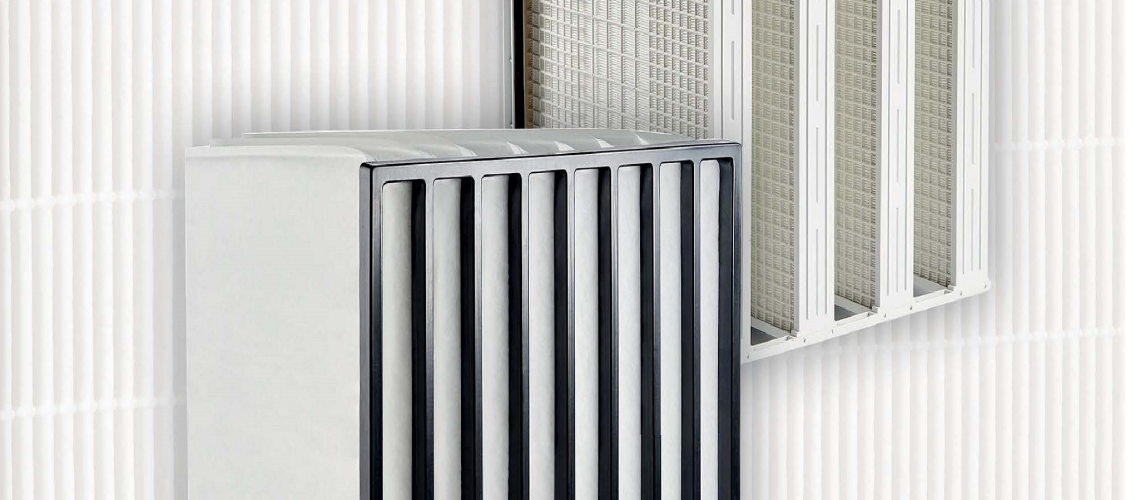
HEPA pocket filters are air filtration products designed to trap fine particles from moving air. “HEPA” refers to high-efficiency particulate air filtration, while “pocket filters” or “bag filters” refer to filters with multiple pocket-like sections that increase the available filter surface area.
This pocket design allows air to pass through a larger filtration area, helping the filter hold more dust and particles while supporting consistent airflow. In many HVAC and air handling systems, pocket filters are used to capture airborne contaminants before they enter occupied spaces, production zones or sensitive equipment areas.
Depending on the system design, HEPA filtration may be used as part of a staged filtration process. This can include pre-filtration to remove larger dust particles, followed by finer filtration to capture smaller pollutants. This layered approach helps extend filter life, protect equipment and improve overall air quality.
For South African businesses, HEPA pocket filters can be especially valuable in environments where dust, allergens and airborne pollutants are common concerns. Dry weather, seasonal pollen, industrial dust, construction activity and high-traffic urban areas can all contribute to poor indoor air quality.
Why Airborne Allergens and Pollutants Are a Real Concern in South Africa
South Africa’s climate and industrial landscape create several air quality challenges. In urban areas, traffic emissions, construction dust and general pollution can enter buildings through doors, windows and ventilation systems. In industrial and manufacturing settings, dust and fine particles may be generated by machinery, raw materials, cutting, processing, packaging or production activities.
Common airborne contaminants include:
- Dust and fine particulate matter
- Pollen and seasonal allergens
- Mould spores
- Fibres and lint
- Smoke and fumes
- Powder residue
- Industrial dust
- Airborne process particles
- General HVAC system contaminants
When these pollutants are not controlled, they can affect indoor comfort and operational efficiency. Employees may experience irritation, allergy symptoms or discomfort. Sensitive processes may be exposed to airborne contamination. HVAC systems may work harder due to clogged or unsuitable filters. In some environments, poor filtration can also increase cleaning requirements and maintenance costs.
This is why choosing the right filtration solution matters. A quality air filtration system does more than remove visible dust. It helps manage the smaller particles that are often harder to see but can still affect air quality.
How HEPA Pocket Filters Help Reduce Allergens
Allergens are often microscopic. Pollen, dust mite particles, mould spores and other irritants can remain suspended in the air and travel through ventilation systems. Once circulated, they can settle on surfaces, enter breathing zones and contribute to discomfort in occupied spaces.
HEPA pocket filters help reduce allergens by capturing particles as air moves through the filter media. The pocket structure provides a larger surface area, which improves the filter’s ability to hold contaminants while maintaining airflow when correctly specified.
In commercial buildings, schools, offices, clinics, retail environments and hospitality spaces, this can help create a cleaner and more comfortable indoor environment. In industrial facilities, reducing airborne allergens and dust can also contribute to a cleaner working space, especially in areas where staff spend long hours indoors.
For businesses that want to improve indoor air quality, filtration should not be treated as an afterthought. The correct filter selection, installation and maintenance schedule all influence performance.
How HEPA Pocket Filters Help Reduce Pollutants
Pollutants can come from both indoor and outdoor sources. Outdoor pollutants may enter through ventilation intakes, open doors or poorly sealed building areas. Indoor pollutants may come from equipment, raw materials, people, packaging, dust-generating processes or cleaning activities.
HEPA pocket filters help reduce pollutants by removing airborne particles before they move deeper into the air handling system or return to the occupied environment. This is especially useful in facilities where air quality plays a role in health, product quality, cleanliness or operational control.
Industries and environments that may benefit from high-efficiency pocket-style filtration include:
- Manufacturing facilities
- Warehouses and distribution centres
- Food and beverage processing areas
- Pharmaceutical and laboratory environments
- Commercial HVAC systems
- Healthcare and clinical spaces
- Office buildings
- Schools and training centres
- Shopping centres and retail spaces
- Workshops and production plants
- Dust-heavy industrial environments
In high-dust applications, pocket filters may be used alongside dust extraction systems, filter bags, cassette filters, panel filters or other filtration products to create a more complete air quality solution.
The Importance of Proper Filter Selection
Not every filter is suitable for every application. A filter that works well in a light commercial HVAC system may not be suitable for a high-dust industrial process. Similarly, an industrial dust control system may require a combination of filtration stages rather than a single filter type.
When selecting HEPA pocket filters, several factors should be considered:
- Airflow Requirements: The filter must support the required airflow of the HVAC or air handling system. If the filter creates too much resistance, the system may work harder, which can increase energy consumption and reduce performance.
- Particle Type and Size: Different environments produce different contaminants. Fine dust, pollen, fibres, powders and process particles may require different filtration efficiencies and filter media types.
- Dust Load: A high-dust environment requires a filter with strong dust-holding capacity. Pocket filters are often selected because their design provides additional surface area for dust collection.
- System Design: The filter must fit the existing air handling unit or filtration system. Filter dimensions, frame type, pocket depth and installation requirements all matter.
- Maintenance Frequency: Filters must be inspected and replaced at suitable intervals. A poorly maintained filter can restrict airflow, reduce filtration performance and place unnecessary strain on the system.
- Operating Environment: Temperature, humidity, airflow speed, chemical exposure and industry-specific requirements can influence filter selection.
We look at the broader filtration requirement rather than only the filter itself. This allows us to support clients with solutions that consider performance, efficiency, maintenance and cost-effectiveness.
HEPA Pocket Filters in HVAC and Air Handling Systems
HVAC systems are central to indoor air quality. They move air through buildings, regulate temperature and support ventilation. However, if the filtration stage is not properly designed, the same system can distribute allergens and pollutants throughout the building.
HEPA pocket filters can assist by capturing fine particles before air is supplied to occupied areas. In a well-designed HVAC system, they may help:
- Improve indoor air cleanliness
- Reduce dust build-up on surfaces
- Support allergy-sensitive environments
- Protect downstream HVAC components
- Improve comfort in occupied spaces
- Reduce the circulation of fine airborne particles
- Support cleaner air in commercial and industrial facilities
For South African businesses, this is especially relevant in areas with high dust levels, seasonal pollen, industrial activity or nearby construction. Proper air filtration helps create a healthier and more controlled indoor environment.
HEPA Pocket Filters and Industrial Dust Control
Industrial facilities often require more robust filtration than standard commercial spaces. Dust may be generated by cutting, grinding, mixing, handling, conveying, packaging or processing activities. If not controlled, this dust can affect workers, machinery, housekeeping and product quality.
Concept Filtration supports industrial air and dust filtration applications with a range of products focused on dust and air quality. This includes bulk air filtration, dust filtration, pocket filters, filter bags, dust extractors and collection units.
In these environments, HEPA pocket filters may form part of a staged dust control strategy. For example, larger dust particles may be captured through pre-filtration or dust collection, while finer particles are addressed through higher-efficiency filtration stages.
This approach can help improve filtration performance while protecting the more sensitive or higher-efficiency filters from premature loading.
The Role of Pre-Filtration
Pre-filtration is often essential in systems using high-efficiency filters. A pre-filter captures larger particles before they reach the finer filter stage. This helps reduce the load on the HEPA or pocket filter, extending its service life and supporting more stable airflow.
Without effective pre-filtration, high-efficiency filters may clog too quickly, leading to increased pressure drop, reduced airflow and higher maintenance costs.
A complete filtration strategy may include:
- Coarse pre-filters for larger dust particles
- Pocket filters for higher dust-holding capacity
- HEPA filters for fine particulate control
- Compact cassette filters for specialised applications
- Filter bags or dust collection filters for industrial systems
- Air filter media suited to the application
This is why a tailored approach is so important. The right filtration combination can improve air quality while helping businesses manage operational costs.
Benefits of HEPA Pocket Filters for South African Businesses
- Improved Indoor Air Quality: The primary benefit of HEPA pocket filters is cleaner air. By capturing fine particles, allergens and pollutants, they help reduce the concentration of airborne contaminants in indoor environments.
- Better Comfort for Staff and Visitors: Cleaner air can contribute to a more comfortable space. This is particularly important in offices, schools, healthcare facilities, hospitality venues and customer-facing environments.
- Protection for Equipment: Dust and airborne particles can accumulate on HVAC components, machinery and sensitive equipment. Effective filtration can help reduce build-up and support longer equipment life.
- Support for Cleaner Production Areas: In manufacturing, food processing, pharmaceutical and packaging environments, air quality can influence product cleanliness and process control. Suitable filtration supports a cleaner operating environment.
- Reduced Cleaning Burden: When airborne dust is controlled more effectively, less dust settles on surfaces, floors, stock and equipment. This can support better housekeeping and reduce cleaning frequency.
- Energy and Maintenance Efficiency: A well-selected filter can help maintain airflow and reduce unnecessary strain on fans and HVAC systems. This is where proper filter specification is crucial.
- Flexible Application: Pocket-style filters are widely used across different HVAC and industrial systems because they offer practical dust-holding capacity and can be integrated into many air handling designs.
Why Filter Quality Matters
A filter is only as effective as its design, media quality, fit and installation. Poor-quality filters may allow bypass, collapse under airflow, load too quickly or fail to capture the required particles.
When evaluating HEPA pocket filters, businesses should consider more than the upfront price. The true cost of filtration includes replacement frequency, energy impact, downtime, labour, system protection and air quality performance.
A quality filtration solution should be selected based on:
- Application requirements
- Airflow and pressure drop
- Filter efficiency
- Dust-holding capacity
- Frame and pocket construction
- System compatibility
- Maintenance requirements
- Long-term operating cost
Concept Filtration supplies quality air filtration products and supports clients with practical filtration solutions for South African and African industries. Our approach focuses on effective and efficient filtration, from design and manufacturing considerations to cost-conscious implementation.
Maintenance: Keeping HEPA Pocket Filters Performing Properly
Even the best filter cannot perform indefinitely. Over time, filters collect dust and particles, which increases resistance to airflow. If filters are not replaced when needed, the system may become inefficient and indoor air quality may decline.
A good maintenance plan should include:
- Regular Inspections: Filters should be inspected for visible dust loading, damage, poor fit, moisture exposure or signs of bypass.
- Pressure Drop Monitoring: In many systems, pressure drop can indicate when a filter is becoming loaded and needs replacement.
- Scheduled Replacement: Replacement intervals should be based on the application, dust load, operating hours and manufacturer or supplier recommendations.
- Correct Installation: Filters must be installed securely and in the correct direction to prevent air bypass and performance loss.
- System Cleaning: Filter housings, frames and surrounding areas should be kept clean to prevent contamination from re-entering the airflow.
For high-dust environments, maintenance intervals may be shorter. For cleaner environments, filters may last longer, but they should still be monitored as part of a planned maintenance schedule.
HEPA Pocket Filters vs Standard Filters
Standard filters may be suitable for larger dust particles or general HVAC protection, but they may not provide the fine particle control needed in more sensitive environments. HEPA pocket filters are used when higher-efficiency filtration is required to reduce finer airborne contaminants.
The difference is not only in filtration efficiency. Pocket filters also offer a larger filter surface area, which can improve dust-holding capacity. This makes them useful in systems that need both effective filtration and practical airflow performance.
However, the best choice depends on the application. In some systems, a standard panel filter may be used as a pre-filter, while a pocket or HEPA filter provides the finer filtration stage. In other systems, compact cassette filters or specialised media may be more appropriate.
The goal is not simply to choose the “strongest” filter. The goal is to choose the right filtration system for the environment.
Where HEPA Pocket Filters Fit into Concept Filtration’s Product Range
Concept Filtration supplies and supports a broad range of filtration products for air and dust applications. Our air filtration range includes products designed for dust control, air quality improvement and industrial filtration needs.
Our offering includes:
- High-capacity HEPA filters
- Pocket air filters
- Bulk air filtration products
- Dust filtration solutions
- Dust control filtration
- Filter bags
- Multifil compact cassette filters
- Multi-As cassette filters
- Air filter media
- Washable pleated panel filters
- Paint and air duct media
- Dust extractors and collection units
This range allows us to support clients across different industries, whether the requirement is general air filtration, fine particle control, dust extraction, HVAC filtration or a more customised filtration system.
Choosing HEPA Pocket Filters for Your Facility
Before selecting HEPA pocket filters, it is useful to assess the environment and the filtration challenge. Ask the following questions:
- What type of airborne particles are present?
- Is the issue mainly dust, allergens, fumes, process particles or a combination?
- What airflow does the system require?
- Is the filter used in an HVAC system, dust extraction system or industrial air handling unit?
- Is pre-filtration already installed?
- How often are filters currently replaced?
- Are there signs of poor air quality, dust build-up or system strain?
- Is the facility in a high-dust area or industrial zone?
- Are there hygiene, production or comfort requirements to consider?
Answering these questions helps determine whether pocket filters, HEPA filters, cassette filters, filter bags or a combination of products will provide the best result.
Common Mistakes to Avoid
- Choosing Filters Based Only on Price: The cheapest filter may cost more in the long run if it blocks quickly, performs poorly or increases system strain.
- Ignoring Airflow Requirements: A filter that is too restrictive can reduce airflow and affect HVAC or extraction performance.
- Skipping Pre-Filtration: Using high-efficiency filters without pre-filtration in dusty environments can lead to rapid clogging and frequent replacements.
- Delaying Filter Replacement: Overloaded filters can reduce performance, increase energy use and allow air quality problems to continue.
- Using the Wrong Filter for the Application: Industrial, commercial and specialised environments require different filtration strategies. The correct filter must match the risk, air volume and particle load.
Why Work with Concept Filtration?
We provide more than individual filter products. We support clients with effective filtration solutions that are aligned with the application, environment and operational requirements.
Our experience covers air filtration, dust filtration, compressor filtration, hydraulic and lubricant filtration, liquid filtration and related filtration systems. This broad filtration knowledge allows us to approach air quality challenges with practical insight and product understanding.
We focus on:
- Quality filtration products
- Effective and efficient solutions
- Turnkey air and dust filtration support
- Industrial and commercial applications
- Cost-effective maintenance considerations
- Filtration products suited to South Africa and Africa
- Practical guidance based on the working environment
Whether you need HEPA pocket filters, pocket air filters, HEPA filters, filter bags or a complete air and dust filtration solution, we can help you identify the right option for your facility.
Frequently Asked Questions About HEPA Pocket Filters
What are HEPA pocket filters used for?
HEPA pocket filters are used to reduce fine airborne particles, allergens, dust and pollutants in HVAC systems, air handling units and certain industrial filtration applications. They help improve air quality by capturing contaminants before air is circulated through a building or workspace.
Are HEPA pocket filters suitable for industrial environments?
Yes, HEPA pocket filters can be suitable for certain industrial environments, especially when used as part of a correctly designed filtration system. In high-dust applications, they may need to be supported by pre-filters, dust extraction systems or other filtration stages.
Do HEPA pocket filters help with allergies?
Yes. HEPA pocket filters can help reduce airborne allergens such as pollen, dust particles and mould spores. This can support a cleaner and more comfortable indoor environment, especially in offices, commercial buildings, healthcare spaces and allergy-sensitive areas.
How often should HEPA pocket filters be replaced?
Replacement frequency depends on the dust load, operating hours, airflow, filter type and application. High-dust environments may require more frequent replacement, while cleaner HVAC systems may allow longer intervals. Regular inspection and pressure drop monitoring are recommended.
Can HEPA pocket filters improve HVAC performance?
Correctly selected and maintained filters can support HVAC performance by protecting system components from dust build-up and helping maintain cleaner airflow. However, filters must be properly matched to the system to avoid excessive airflow restriction.
What is the difference between pocket filters and HEPA filters?
Pocket filters have a bag or pocket-style design that provides a larger filtration surface area and good dust-holding capacity. HEPA filters are high-efficiency filters designed to capture very fine particles. In some systems, both may be used in staged filtration, depending on the application.
Are HEPA pocket filters energy efficient?
They can support efficient operation when properly specified. The key is choosing a filter that provides the required filtration efficiency without creating unnecessary resistance in the system. Poorly selected or overloaded filters can increase energy use.
Does Concept Filtration supply air filtration products for South African businesses?
Yes. Concept Filtration supplies a range of air and dust filtration products for South African and African applications, including HEPA filters, pocket air filters, bulk air filtration products, dust control filtration, filter bags, cassette filters and air filter media.
Improve Air Quality with the Right HEPA Pocket Filters
Cleaner air supports healthier people, better working conditions and more reliable systems. If your facility is dealing with dust, allergens, airborne pollutants or poor HVAC filtration performance, it may be time to review your current filter setup.
Concept Filtration can assist with practical, efficient and application-specific filtration solutions for commercial, industrial and specialised environments. Our team can help you assess your air quality needs, identify suitable products and supply filtration solutions designed to perform in demanding South African conditions.
Speak to us about HEPA pocket filters, HEPA filters, pocket air filters, filter bags, dust filtration products and complete air filtration solutions that support cleaner, safer and more efficient air management.